
Introduction
Back-end development handles everything users don’t see on a website, including servers, databases, authentication, and business logic. It ensures data is processed securely and pages respond correctly to user actions.
Back-end development matters because a beautiful interface is useless if data can’t be saved, retrieved, or protected. This guide explains back-end development in simple language, how it works in real projects, and where beginners commonly get confused.
Why Back-End Development Is Critical Today
Modern websites depend on back-end systems for:
User logins and authentication
Form submissions and data storage
Payments and subscriptions
APIs and integrations
Security and performance
From real experience, I’ve seen front-end–perfect websites fail completely because the back-end couldn’t handle traffic or basic validation.
What Is Back-End Development? (Plain English)
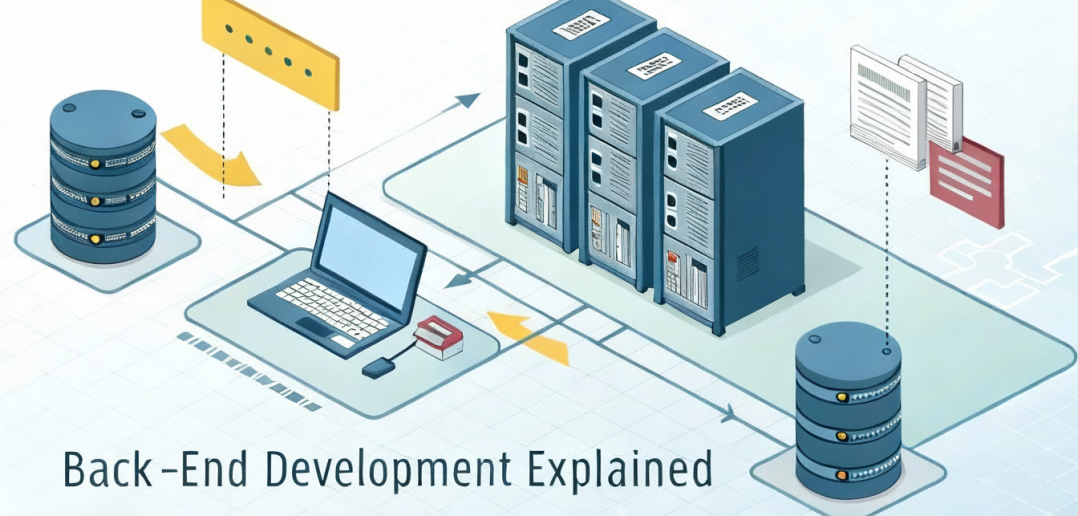
Back-end development is the logic engine of a website.
It answers questions like:
Where is data stored?
Who is allowed to access it?
What happens after a user clicks submit?
Back-end developers focus on reliability, security, and scalability.
Core Components of Back-End Development
| Component | Role |
| Server | Handles requests |
| Database | Stores data |
| Application logic | Processes rules |
| Authentication | Controls access |
| APIs | Connect systems |
All components must work together smoothly.
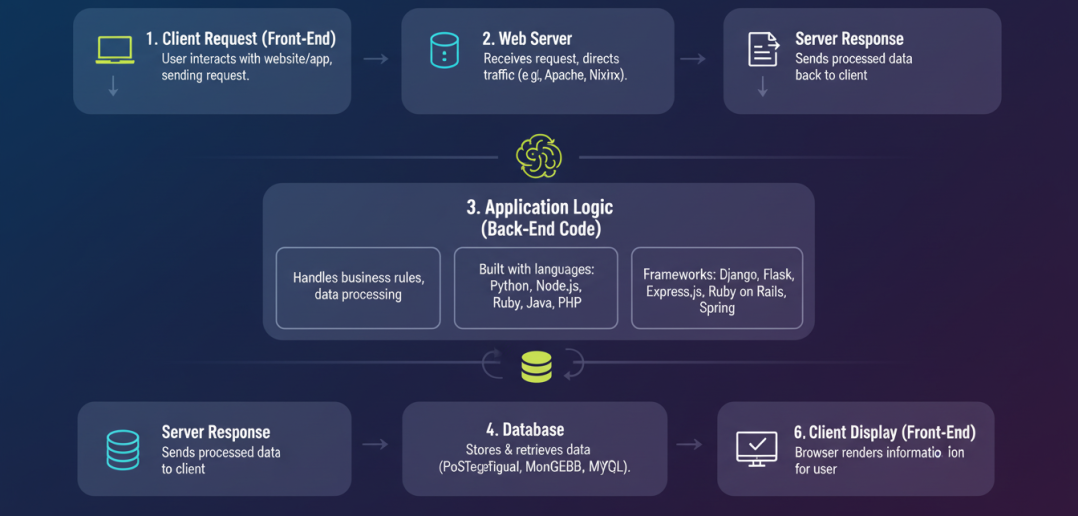
How Back-End Development Works (Step-by-Step)
User submits a request
Server receives the request
Validation checks run
Database is queried or updated
Logic processes the result
Response is sent back
Speed, accuracy, and security are essential at every step.
Beginner Mistake Most People Make
“Trusting user input”
Why this fails:
Security vulnerabilities
Broken data
System abuse
Fix:
Always validate and sanitize inputs on the server.
Real-World Scenario: Form Submits but Data Is Missing
Symptoms:
Success message shown
No data saved
Cause:
Server-side validation error
Database connection issue
Fix:
Log server errors
Validate inputs
Confirm database writes
Common Back-End Languages & Tools
| Category | Examples |
| Languages | PHP, Python, Node.js |
| Databases | MySQL, PostgreSQL |
| Servers | Apache, Nginx |
| APIs | REST, GraphQL |
| Auth tools | Tokens, sessions |
Tool choice matters less than understanding concepts.
Back-End Development & Security Basics
Back-end handles:
Password hashing
Access control
Data protection
Expert Warning
Most website hacks happen due to weak back-end security, not design flaws.
Information Gain: Why Simple Back-Ends Often Scale Better
Many beginners overcomplicate systems.
In reality:
Simple logic is easier to debug
Fewer dependencies reduce failure points
Clear architecture scales more predictably
Overengineering early often creates long-term maintenance problems—rarely discussed in beginner guides.
Back-End vs Front-End (Quick Comparison)
| Aspect | Back-End | Front-End |
| Visibility | Hidden | Visible |
| Focus | Logic & data | UI & UX |
| Errors | Silent but critical | Obvious |
| Skills | Databases, security | Layout, interaction |
Both sides must work together for a successful website.
Back-End Development & SEO (Hidden Connection)
Back-end affects SEO through:
Page speed
Server response time
Error handling (500s, 404s)
API reliability
Pro-Tip
A slow or unstable back-end can quietly damage rankings even with great content.
Recommended YouTube Explainer
Search on YouTube:
“Back-End Development Explained for Beginners”
(Server and database walkthrough videos perform best)
FAQs
What is back-end development?
It manages server logic, databases, and data processing.
Is back-end harder than front-end?
It’s different—logic-focused rather than visual.
Do I need back-end for small websites?
Yes, for forms, logins, and data handling.
Can front-end developers learn back-end?
Yes, many become full-stack developers.
Does back-end affect website speed?
Yes, directly through server response time.
Is back-end development in demand?
Yes, demand remains strong.
Conclusion: Key Takeaways
Back-end development is the backbone of functional websites. It ensures data is secure, systems respond correctly, and users can interact reliably. Beginners should focus on understanding logic, validation, and security before chasing advanced frameworks. A strong back-end keeps everything running smoothly behind the scenes.
Internal link
best Full-Stack Development Explained: Skills, Tools & Path 2025


